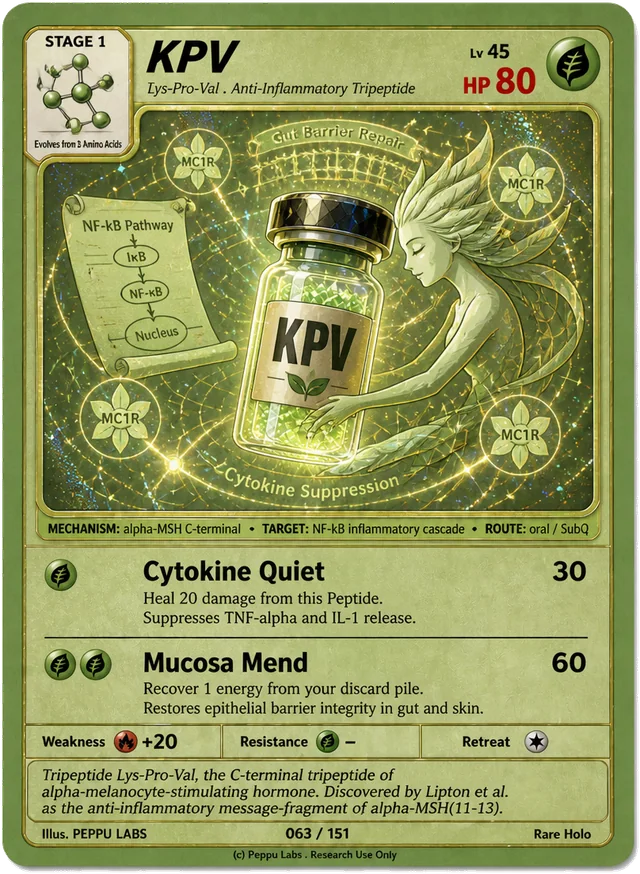
NO. 041 · BASIC · Lv. 60 · HP 95
KPV
Alpha-MSH C-Terminal Anti-Inflammatory Tripeptide
ALIASES
KPV, Lys-Pro-Val, alpha-MSH(11-13), anti-inflammatory tripeptide
CLASS
Synthetic tripeptide · alpha-MSH C-terminal anti-inflammatory fragment
FORMULA
C16H30N4O4
SEQUENCE
Lys-Pro-Val
HALF-LIFE
Short (minutes) plasma · longer tissue retention reported
ROUTES
Oral (preclinical) · Subcutaneous (research) · Topical (research)
MECHANISM OF ACTION
Lys-Pro-Val · C-terminal tripeptide of alpha-MSH. Retains the anti-inflammatory activity of the parent hormone without its melanogenic activity. Mechanisms include melanocortin-receptor signaling and direct intracellular NF-kappaB inhibition. Studied in DSS colitis and dermatologic inflammation.
EVIDENCE GRADES
Brzoska review (PMID 18483175) summarizes multi-paper evidence of KPV anti-inflammatory activity in dermatologic and intestinal models.
Kannengiesser 2008 (PMID 18067137) reported KPV amelioration of intestinal inflammation in DSS colitis.
Small pilot human trials only. No completed Phase 3 evidence.
MECHANISM CATEGORIES
RESEARCH CONDITIONS
SAFETY
Side effects
- Generally well-tolerated in preclinical data
- Limited published Western human safety data
- No melanogenic activity (key distinction from full alpha-MSH)
Known interactions
- No major drug-drug interactions documented
Contraindications
- Pregnancy/lactation (unstudied)
- Hypersensitivity
REGULATORY STATUS
FDA · Not FDA-approved. Research-use only.
WADA · Not currently listed on the WADA Prohibited List (2026).
STORAGE
Lyophilized · 2-8 °C, 24 months
Reconstituted · 2-8 °C, 28 days
PEER-REVIEWED EVIDENCE
- Brzoska T, Luger TA, Maaser C, Abels C, Bohm M. Alpha-melanocyte-stimulating hormone and related tripeptides: biochemistry, antiinflammatory and protective effects in vitro and in vivo, and future perspectives for the treatment of immune-mediated inflammatory diseases. Endocr Rev 2008. PMID 18483175. link →
- Kannengiesser K, Maaser C, Heidemann J, et al.. Melanocortin-derived tripeptide KPV has anti-inflammatory potential in murine models of inflammatory bowel disease. Inflamm Bowel Dis 2008. PMID 18067137. link →
FAQ · 8 QUESTIONS
▶ What is KPV?
KPV is a synthetic tripeptide (Lys-Pro-Val) representing the C-terminal three residues of alpha-melanocyte-stimulating hormone (alpha-MSH(11-13)). It retains the anti-inflammatory activity of the parent hormone without its melanogenic activity, making it useful as an anti-inflammatory research compound without pigmentation side effects.
▶ How does KPV work?
Proposed mechanisms include melanocortin receptor signaling (MC1R, MC5R) and direct intracellular inhibition of NF-kappaB activation. The molecule is small enough to cross epithelial barriers including the intestinal mucosa, enabling oral and topical research applications.
▶ KPV vs alpha-MSH · why use the fragment?
Full alpha-MSH (13 residues) activates MC1R-MC5R with anti-inflammatory effects but also drives melanocyte stimulation and pigmentation changes via MC1R. KPV retains the anti-inflammatory arm without significant MC1R-driven pigmentation, useful for research applications where pigmentation side effects are unwanted.
▶ Is KPV FDA-approved?
No. Research-use only.
▶ Is KPV WADA-prohibited?
KPV is not currently listed on the WADA Prohibited List as of 2026.
▶ What's the half-life of KPV?
Short plasma half-life (minutes). Tissue retention is reportedly longer. Research protocols use frequent dosing or topical/oral routes to maintain target-tissue exposure.
▶ What is the IBD research evidence?
Kannengiesser 2008 (PMID 18067137) reported KPV amelioration of intestinal inflammation in DSS-colitis mouse model. Small pilot human trials describe modest symptom improvement in inflammatory bowel disease. No completed Phase 3 evidence as of 2026.
▶ Can KPV be combined with BPC-157?
Different mechanisms; combination is theoretical. KPV acts on inflammatory cytokine signaling and NF-kappaB. BPC-157 acts on tissue-repair pathways (VEGF angiogenesis, GHR upregulation). The two are independent and theoretically complementary in gut-repair research contexts. No published combination RCT exists.
SIGNATURE MOVES
Direct intracellular NF-kappaB inhibition.
DSS-colitis rodent models. IBD anti-inflammatory signal.
SOURCED FROM PEPPU LABS
Reference compounds documented on this page are available as research-grade material at Peppu Studio · ≥99% purity · per-batch Certificate of Analysis. For laboratory research use only. No human dose is recommended by this wiki.
▶ LAST UPDATED · 2026-05-25