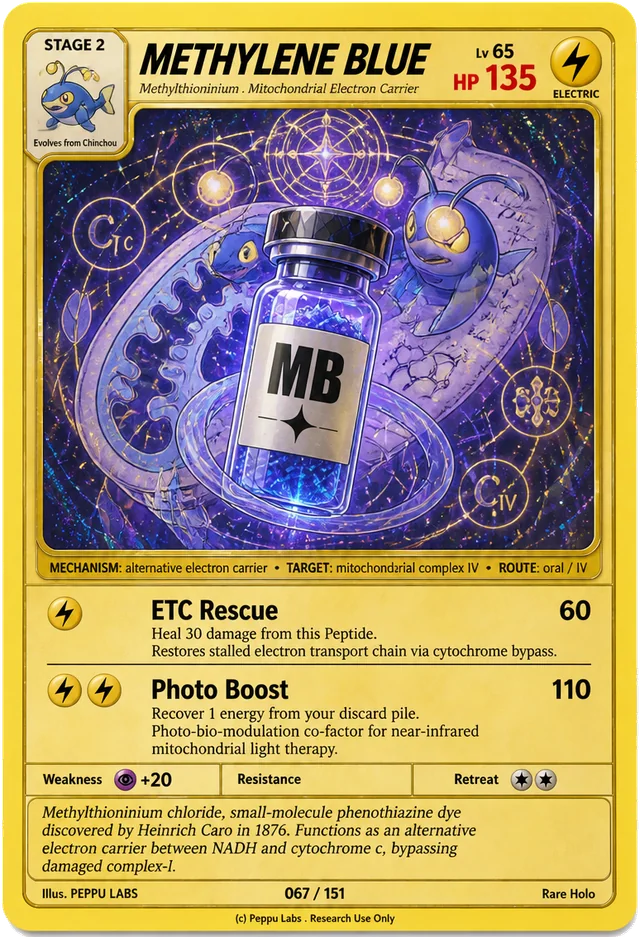
NO. 045 · STAGE 1 · Lv. 65 · HP 115
METHYLENE BLUE
Mitochondrial Electron Carrier · USP Grade
ALIASES
Methylene blue, methylthioninium chloride, Provayblue, MB
CLASS
Small molecule · phenothiazine dye · alternative mitochondrial electron carrier
FORMULA
C16H18ClN3S
HALF-LIFE
~5-6 hours (oral / IV)
ROUTES
Oral (research) · Intravenous (FDA-approved Provayblue)
MECHANISM OF ACTION
Phenothiazine dye that acts as an alternative electron carrier in the mitochondrial electron-transport chain · accepts electrons at complex I and donates at cytochrome c, bypassing complex I/III dysfunction. FDA-approved for methemoglobinemia (Provayblue). Investigational in cognitive aging, ifosfamide-induced encephalopathy, and septic shock.
EVIDENCE GRADES
FDA-approved as Provayblue (IV 1-2 mg/kg) for acquired methemoglobinemia. Well-established clinical efficacy.
Wen 2011 (PMID 21357427) and adjacent studies characterize methylene blue as alternative electron acceptor at complex I / donor at cytochrome c, bypassing complex I/III dysfunction.
Small fMRI studies describe enhanced sustained attention. No completed Phase 3 cognitive trials.
Used in ifosfamide-induced encephalopathy. Limited published RCT evidence.
MECHANISM CATEGORIES
RESEARCH CONDITIONS
SAFETY
Side effects
- Blue urine and stool discoloration (expected)
- Blue skin/sclera tint at higher doses
- Headache
- Dizziness
- Serotonin syndrome risk (MAO inhibition)
- Hemolysis in G6PD deficiency
Known interactions
- SSRIs / SNRIs / serotonergic agents (serotonin syndrome risk · methylene blue is a reversible MAO-A inhibitor)
- Tramadol (serotonin syndrome risk)
Contraindications
- G6PD deficiency
- Recent serotonergic drug use
- Severe renal impairment
- Pregnancy/lactation (caution)
REGULATORY STATUS
FDA · Approved as Provayblue (IV methylene blue, 2016) for acquired methemoglobinemia in adults and pediatric patients. Off-label oral use in research and clinical contexts.
WADA · Not currently listed on the WADA Prohibited List (2026).
STORAGE
Lyophilized · Room temperature, light-protected
Reconstituted · n/a · supplied as solution or tablets
PEER-REVIEWED EVIDENCE
- Wen Y, Li W, Poteet EC, et al.. Alternative mitochondrial electron transfer as a novel strategy for neuroprotection. J Biol Chem 2011. PMID 21357427. link →
- Oz M, Lorke DE, Petroianu GA. Methylene blue and Alzheimer's disease. Biochem Pharmacol 2009. link →
FAQ · 8 QUESTIONS
▶ What is methylene blue?
Methylene blue is a phenothiazine dye with documented FDA-approved use for methemoglobinemia (Provayblue, 2016, IV 1-2 mg/kg). It also acts as an alternative electron carrier in the mitochondrial electron-transport chain, the basis for research applications in cognitive aging, neuroprotection, and mitochondrial dysfunction.
▶ How does methylene blue work in mitochondria?
Methylene blue accepts electrons at complex I of the mitochondrial electron-transport chain and donates them to cytochrome c, effectively bypassing complex I and complex III. In cells with complex I/III dysfunction (aging, ischemia, certain mitochondrial diseases), this alternative pathway preserves ATP production and reduces reactive-oxygen-species generation.
▶ Is methylene blue FDA-approved?
Yes for one specific use: Provayblue (IV methylene blue) is FDA-approved for acquired methemoglobinemia. Off-label oral use for cognitive research and mitochondrial-dysfunction research is not FDA-approved.
▶ What is the half-life of methylene blue?
Approximately 5-6 hours plasma half-life for both oral and IV routes.
▶ What are the side effects?
Blue urine and stool discoloration are expected at any dose. Higher doses produce blue skin/sclera tinting. Methylene blue is a reversible MAO-A inhibitor and produces serotonin syndrome risk when combined with SSRIs, SNRIs, or other serotonergic agents. G6PD deficiency contraindicates use due to hemolysis risk.
▶ Why is the serotonin syndrome warning important?
Methylene blue inhibits monoamine oxidase A (MAO-A), the enzyme that clears serotonin from synaptic clefts. Combined use with SSRIs, SNRIs, tramadol, or other serotonergic agents produces additive serotonin accumulation and risk of serotonin syndrome (hyperthermia, agitation, myoclonus, autonomic instability). This is a major contraindication.
▶ What dose is used in cognitive research?
Low-dose oral methylene blue research typically uses 0.5-4 mg/kg per day. The Provayblue IV methemoglobinemia dose is 1-2 mg/kg. This wiki does not recommend any specific dose without clinical supervision.
▶ Is methylene blue WADA-prohibited?
Methylene blue is not currently listed on the WADA Prohibited List as of 2026.
SIGNATURE MOVES
Bypasses complex I/III. Alternative ETC carrier.
FDA-approved for methemoglobinemia. IV 1-2 mg/kg.
SOURCED FROM PEPPU LABS
Reference compounds documented on this page are available as research-grade material at Peppu Studio · ≥99% purity · per-batch Certificate of Analysis. For laboratory research use only. No human dose is recommended by this wiki.
▶ LAST UPDATED · 2026-05-25